A Curriculum in Financial Markets (Created with AI)
For the following linked resources, please note that the ideas, questions, and the direction were mine — but the work itself was done by Claude, Anthropic’s AI. AI can make mistakes, so please refer accordingly. Also, all numbers are for directional reference only.
I’ve been building a set of resources for a while now — partly for the conversations I have with capital allocators, partly for my own thinking around capital allocation and portfolio construction. What started as a slide deck became something more: ten interconnected modules covering the full arc of financial markets education, from first principles through to the operational mechanics of running a family office portfolio. Here following is a first-cut output of the exercise.
This is as much a demonstration of what AI tools can now deliver as it is an investment resource. The curriculum draws heavily on two books in particular: David Swensen’s Pioneering Portfolio Management and Glen Arnold’s FT Guide to Financial Markets — both are cited throughout, and I’d encourage anyone who finds this useful to read them properly. The Appendix draws from many sources – Kahneman, Taleb and so on (listed in the appendix module). The data, direction and numbers are from the books mainly and hence, may be dated. Please regard them as directional reference only.
This blog is a notebook, and the intention is to share some notes from these books. I should also note that I myself approach the following in the spirit of a student as much as I have helped craft it. It lives here as a public resource for whoever stumbles across it and finds it useful.
Module 1 — How Financial Markets Work The starting point: why financial markets exist, how money flows from savers to productive use, and what every major market — equities, bonds, money markets, derivatives, FX — actually does and why.
Module 2 — Portfolio Construction & Capital Allocation The most important decision in investing is not which stock to buy — it is how to allocate capital across asset classes. This module builds Swensen’s Yale framework from first principles: the equity bias, the six asset classes, the efficient frontier, and the six-step policy portfolio process.
Module 2 Extension — Manager Selection & Rebalancing The operational engine behind the policy portfolio: how to find, evaluate, hire, monitor investment managers — and how to maintain portfolio discipline when markets pull you off course.
Module 3 — Equity Markets How equity markets are structured, how prices are formed, how companies are valued, and what the evidence on factor investing and active versus passive management actually says.
Module 3 Addendum — Sector & Subsector Valuation A reference guide to the metrics that matter by sector: why P/E is meaningless for a bank, why a SaaS company is valued on ARR and Net Revenue Retention, and what to look for across all eleven GICS sectors and forty-plus subsectors.
Module 4 — Fixed Income & Interest Rate Products The world’s largest asset class, and the one most investors understand least. From overnight money markets and the LIBOR-SOFR transition through government bonds, credit, the yield curve, securitisation, and interest rate derivatives.
Module 5 — Hedge Funds & Alternatives What hedge funds actually are, how the major strategy families work, what fees really cost compounded over time, how to conduct due diligence, and when alternatives belong in a portfolio — and when they don’t.
Module 6 — Private Markets: Private Equity & Venture Capital This module covers the full private markets universe: fund structure, LBO mechanics, venture capital’s power law, performance measurement, and what it actually takes to evaluate and access this asset class well.
Module 6 Extension — Private Credit In fifteen years, private credit has grown from a niche alternative into a $3.5 trillion asset class that now finances more mid-market companies than traditional bank lending does — and is increasingly finding its way into family office portfolios. This extension covers how it works, what it earns and where it fits.
Modules 1–6 are universal — the frameworks apply whether you are a pension fund trustee, a family office CIO, or an HNI investor learning the vocabulary for the first time. Module 7 is the family office wrapper.
Module 7 — The Family Office Framework How to apply institutional investment principles within the specific context of private wealth — governance, the policy portfolio, spending policy, liquidity management, tax structure, generational considerations, and the annual decision cycle.
And the Appendix shows all the above in a new, unfamiliar light:
Appendix — The Familiar Field in Unfamiliar Light The modules build the framework. This appendix challenges it — four essay layers drawing on behavioural science, risk parity, practitioner research, and Taleb’s philosophy of fragility to show the same field from angles the standard model doesn’t reach.

A perspective on government finances – deficits and debt

Urbanization – under new definition
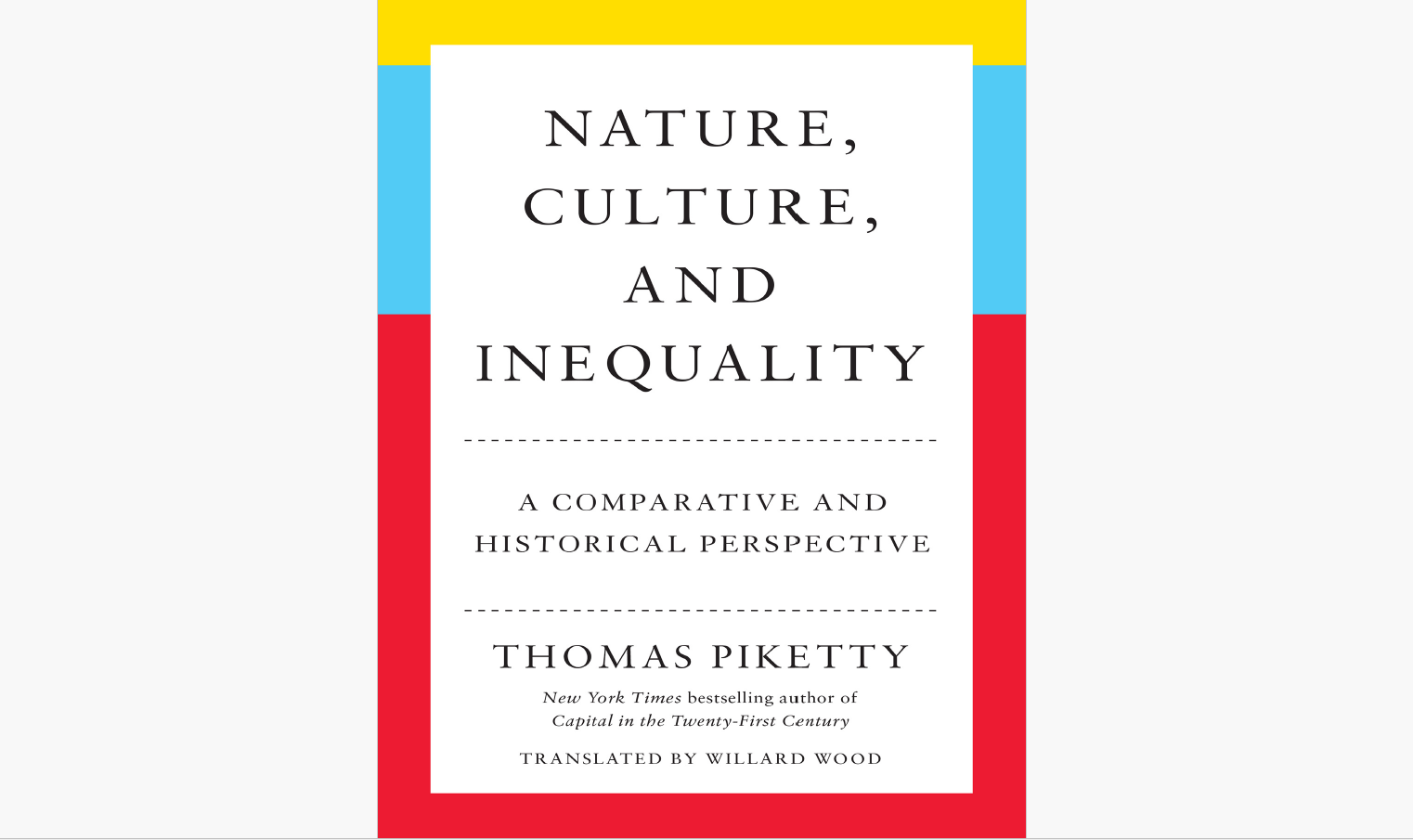
Thomas Piketty’s ‘Nature, Culture and Inequality’ – some notes
About The Author
