Urbanization – under new definition
A short post to note a few interesting takeaways and charts from the World Urbanization Prospects 2025 report. It changes the way urbanisation has been measured so far. “Earlier editions were based on data reported by national statistical authorities according to country specific definitions.” The 2025 revision brings it all under one fold of rural, town and city population.
This is akin to accounting policy change in an annual report. What it implies is that all the demographic data points circulating about urban-rural divide got updated and changed with this report. Earlier, reliance was on country specific methodology, now it is a more harmonious system.
Three things that stand out for me:
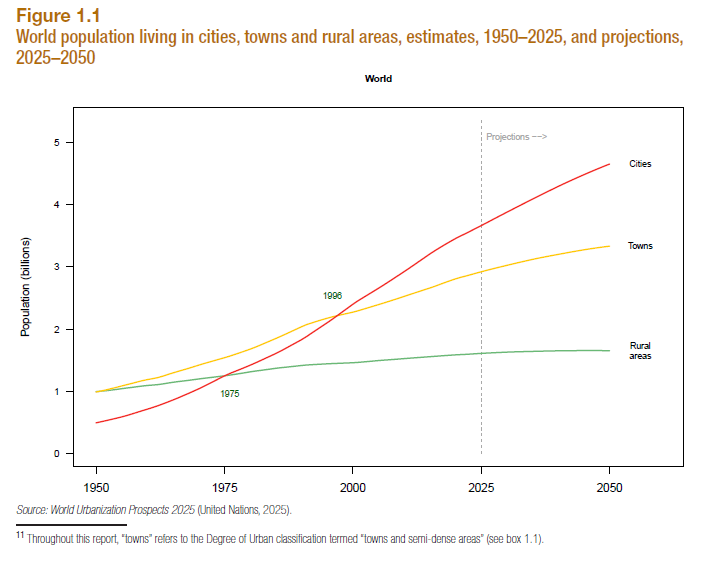
- Earlier, it was estimated that urban-rural divide reached 50% of the world population in 2007, now this data point changes. What it presents is that the world has been undercounting the urban (city and town) population and overcounting the rural population. (see charts below)
- One of the interesting takeaways is that world rural population is yet to peak, in 2040s. So though in percentage terms rural population might be shrinking, the world’s total rural population is yet to go up in absolute terms. It spells impacts for policy makers.
- The American/European system or the West has never seen cities the way the Asian system has seen or will see cities (the number of people living in one city) or African continent will eventually witness. In terms of learning how to be a big, functional city, the world will perhaps do well to look towards, say, Japan (Tokyo), than just other Western countries. Eventually each city evolves given its individual dynamics, but the way Japan has urbanised itself has lessons for rest of the world.
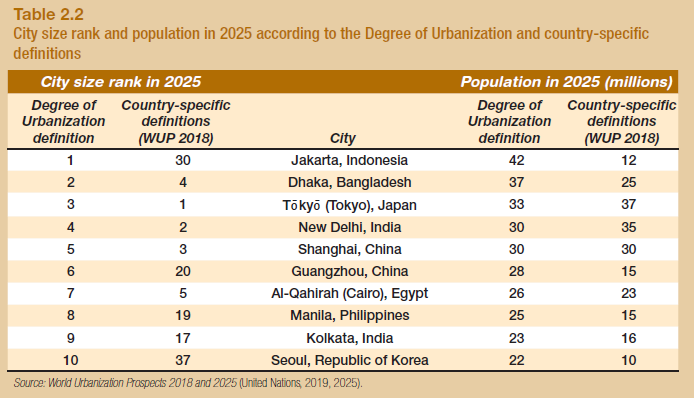
The following charts show the difference in methodology across the world and then across the two largest nations by population, India and China. That explains why the gap between the findings. Previously national definitions were being relied on. Now they have been brought under one fold.
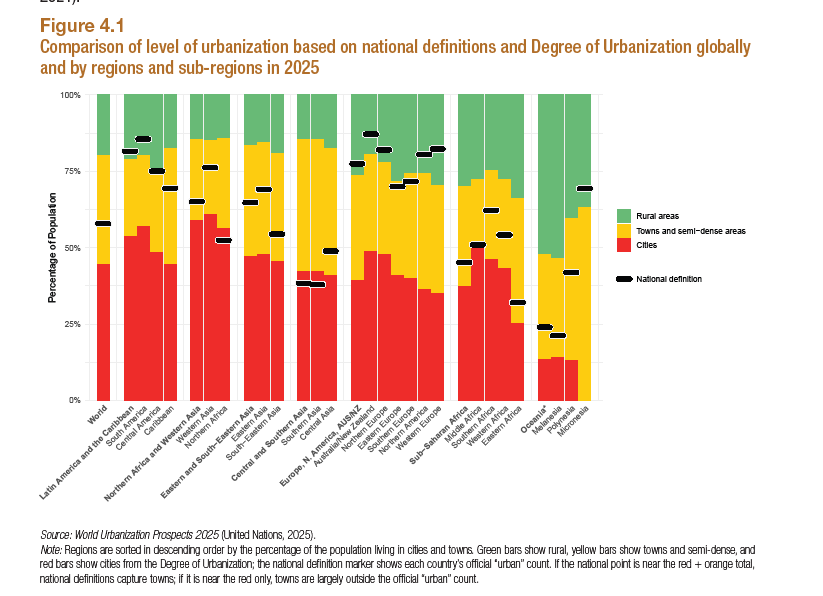
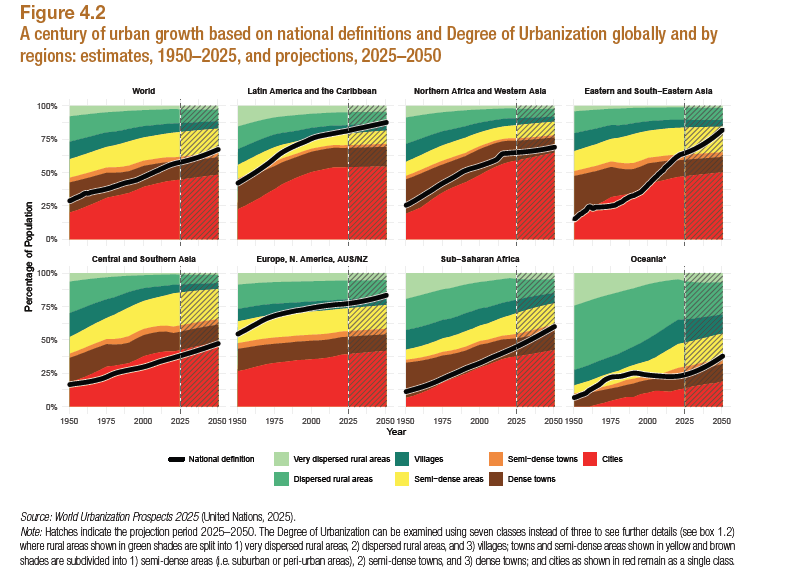
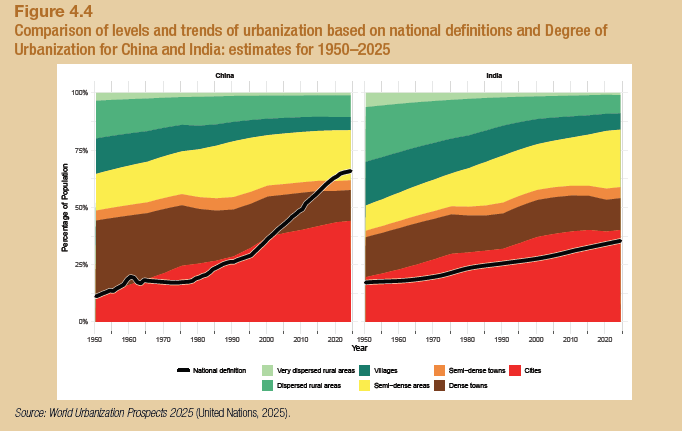
A few fascinating charts from the report collected here:
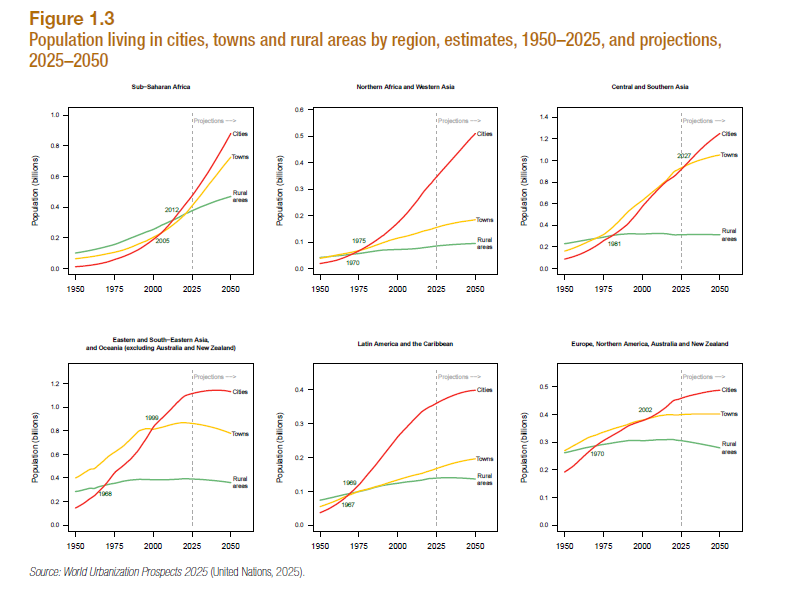
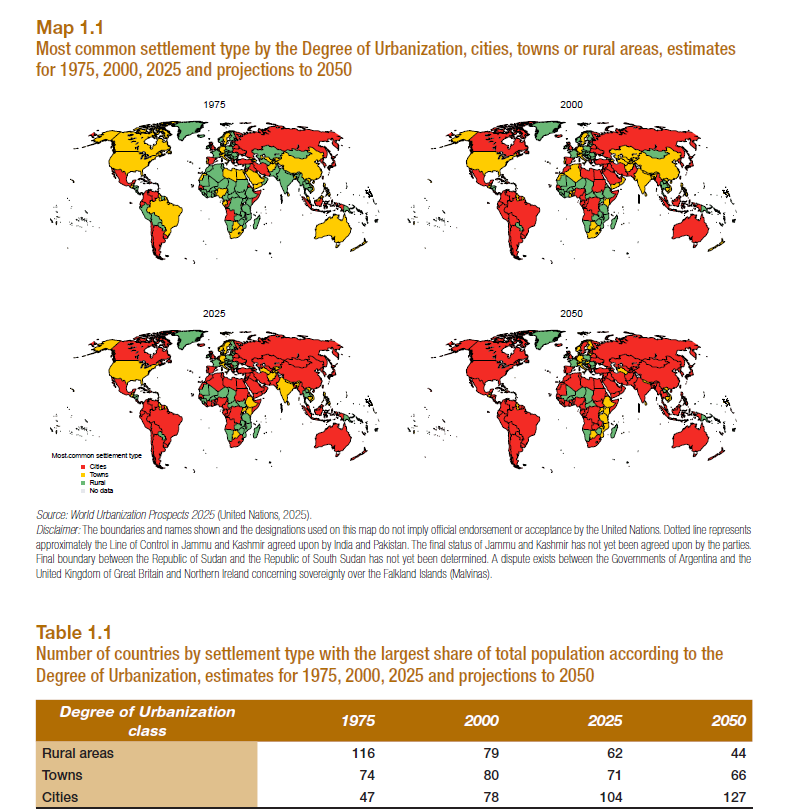
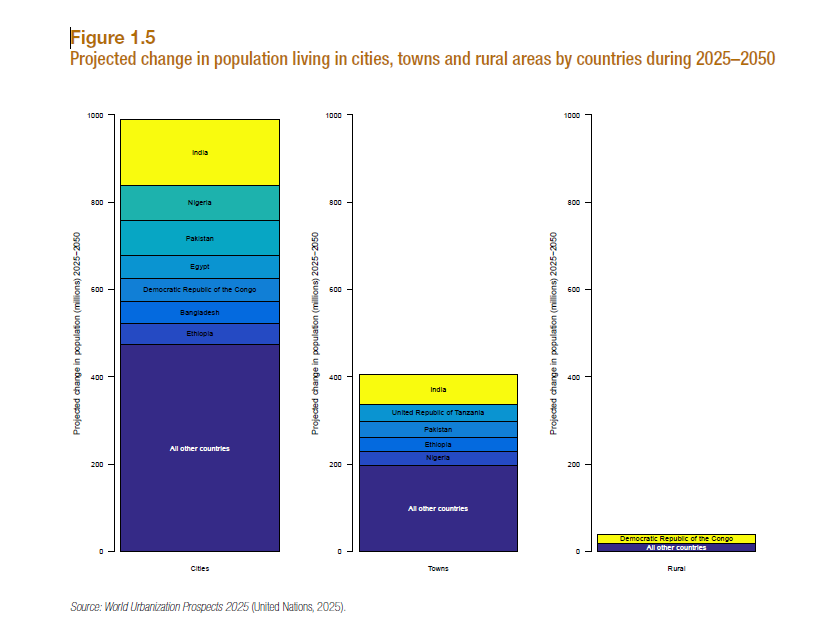
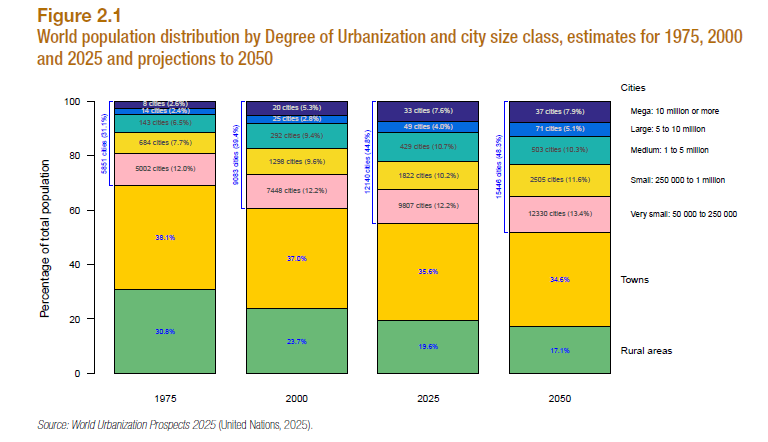
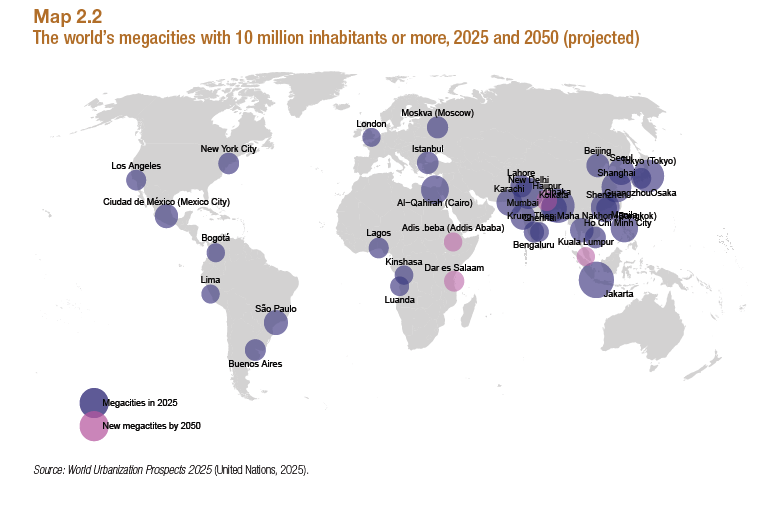
Given the change in definitions, the world’s largest cities is an updated list as well
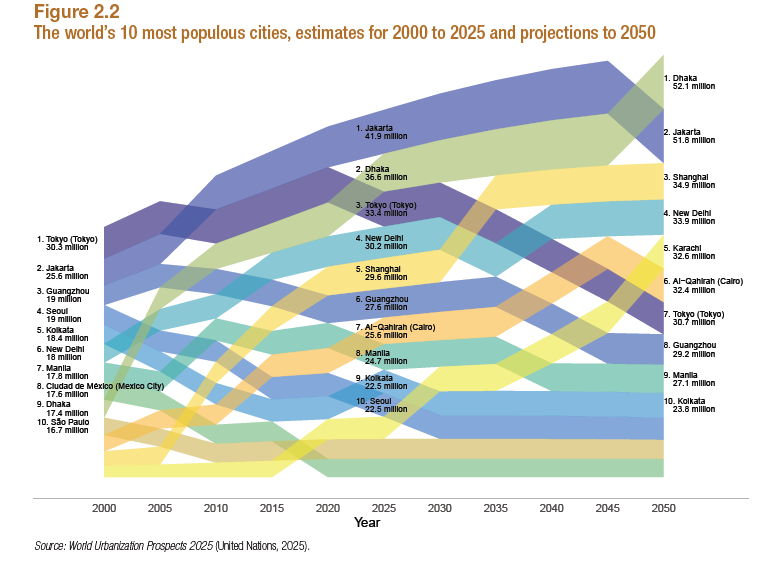
As to some lessons from Japan, see here, and here.
*
On further seeking inputs from AI on the above report, following are the additional pointers or insights from the report:
“The “towns” blind spot is the real story
The most under-discussed finding is about towns, not cities. Towns remain the predominant settlement type in 71 countries in 2025, including Germany, India, Uganda and the United States. The policy conversation almost always orbits cities, but the report makes clear that towns are the connective tissue of the settlement system — linking rural producers to urban markets, absorbing migration before it flows onward to cities. The historic bias in national definitions (classifying many towns as “rural,” especially in Asia and Africa) means towns have been systematically invisible in planning frameworks. That invisibility has consequences for infrastructure investment and service delivery precisely where the population is.
The shrinking city problem is as real as the growing one
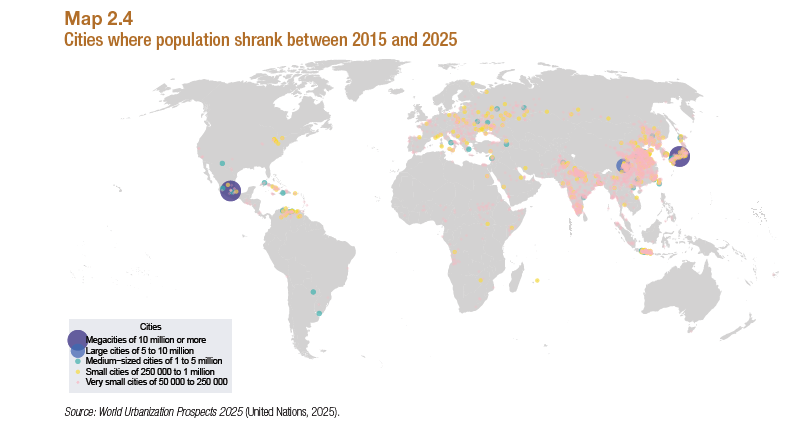
More than 3,000 cities experienced population decline between 2015 and 2025, with over a third in China and another 17 per cent in India. This is the counternarrative to the urbanisation story, and it’s significant. The same report that projects hundreds of millions of new city dwellers also shows thousands of cities hollowing out. Looking ahead, China and Japan are expected to lose approximately 26 million and 12 million city residents respectively by 2050, primarily due to persistently low fertility rates. Managing urban contraction — maintaining services, repurposing infrastructure, preventing fiscal death spirals — is a policy challenge the urbanisation literature barely addresses.
Sub-Saharan Africa is in a category of its own
Sub-Saharan Africa is the only region that experienced substantial growth in its rural population over recent decades, and nearly all future growth of the world’s rural population will take place in sub-Saharan Africa. Meanwhile it’s also urbanising rapidly — in 2025 its 1.27 billion inhabitants were roughly evenly distributed across cities (38%), towns (32%) and rural areas (30%). No other region has this three-way near-balance. It means Africa is simultaneously managing all three transitions at once — rural growth, town formation, and city expansion — without the sequential staging that allowed other regions to build institutional capacity one layer at a time.
Seven countries will determine whether global urbanisation succeeds or fails
India, Nigeria, Pakistan, Democratic Republic of the Congo, Egypt, Bangladesh and Ethiopia are expected to add more than 500 million city residents between 2025 and 2050, accounting for over half of the projected 986 million increase in global city dwellers. The report is unusually direct about this: the success or failure of urbanisation in these countries will shape global development outcomes. It’s a useful frame for thinking about where institutional capacity-building, climate adaptation investment, and urban planning innovation actually need to land. Not in cities that have already solved these problems. “

Understanding Food & Agriculture around the world

Understanding Healthcare
Two centuries of growth in one table | a story in numbers
About The Author
